May 7, 2026 Jonathan Almanza
USD 1,600 a month for a pipeline that ran once a day
A client was paying for Redshift, Glue and a row of Lambdas to serve 30 GB queried once a day. We switched almost everything off, made PostgreSQL the orchestrator, and the bill dropped 91%.
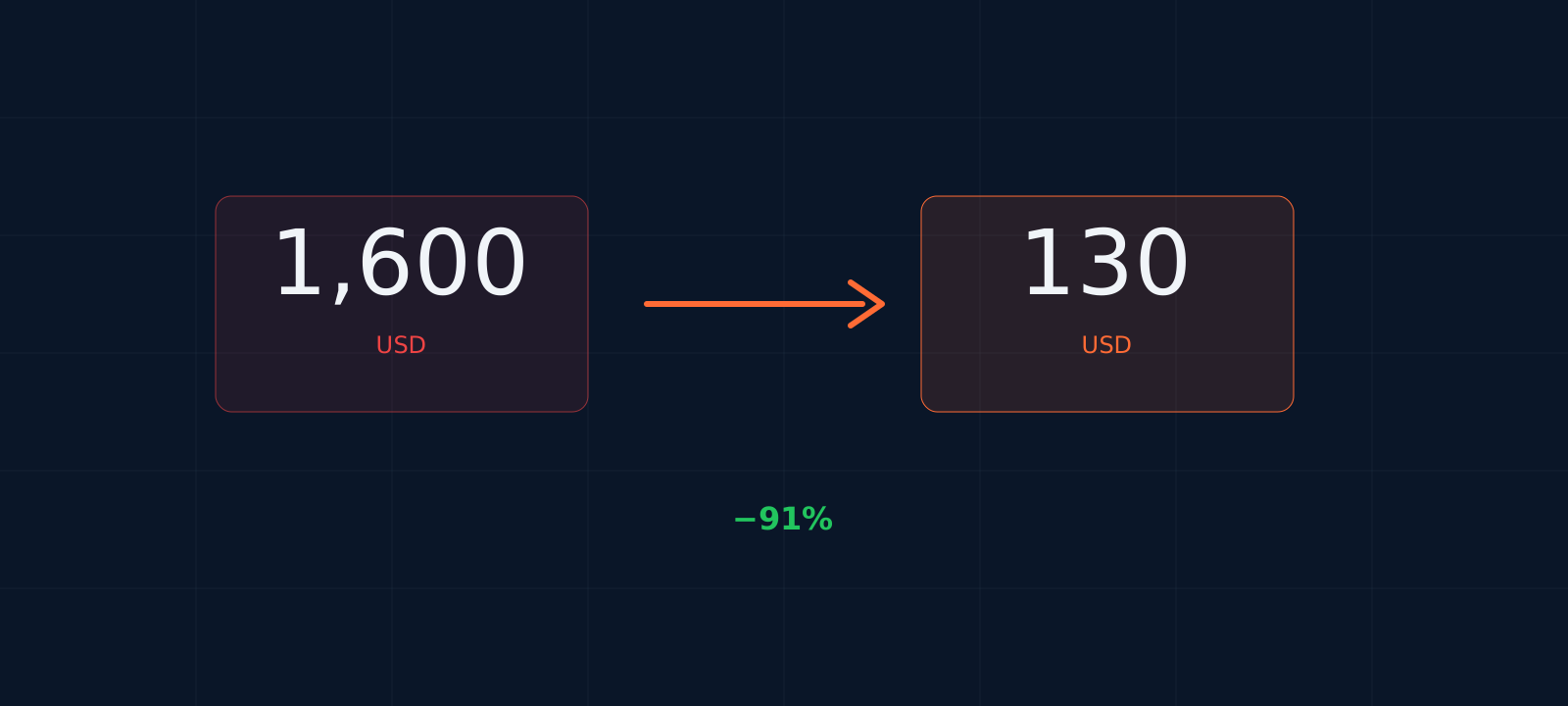
A large client had a problem costing them USD 1,600 a month. They asked us to review their infrastructure and run a full audit. That's where it started.
The problem we inherited
- A pipeline that took 1.5 to 2 hours to make data ready for Power BI
- Queries running 8 to 10 minutes
- 30 GB of data growing without order
- Several Lambdas with no CI/CD, hardcoded credentials, and no failure alerts
- A frustrated team, because "the data is always late"
What we found
- Redshift holding just 30 GB, queried once a day from Power BI
- Glue ETL loading everything into memory to do a merge
- Data duplicated — even triplicated across the database, S3 and intermediate processes
- No state tracking: when a process failed, nobody knew until the report didn't arrive
The decision
Simplify the architecture completely: switch off Redshift and Glue, and center the whole flow on PostgreSQL over EC2.
What we built
- PostgreSQL as the central orchestrator
- A
report_statustable with idempotency keys - A single Lambda as the S3 trigger
- Automatic schema and table generation
- Materialized views for the dashboards
- Automatic retries and controlled reprocessing
- CI/CD for the orchestrator
The result
| Before | After |
|---|---|
| USD 1,600/mo | USD 130/mo |
| 2-hour pipeline | minutes |
| 8–10 min queries | 1–5 seconds |
| 30 GB | 5 GB |
| Unordered growth | predictable architecture |
The takeaway
You don't need an "enterprise" architecture for everything. Sometimes the best solution isn't adding more services: it's understanding the problem and designing something simpler, cheaper and more efficient. The right tool isn't the most expensive one — it's the one that actually solves your need.
Have you seen over-engineered architectures for simple problems?