September 5, 2026 Izumiti Labs
From manual INSERTs to self-service: AstralQ v1 to v2
Every new client meant credentials over email and rows inserted by hand. In v2, the seller clicks Connect, authorizes with their Amazon account, and their tenant is born — encrypted, isolated, pipeline running.
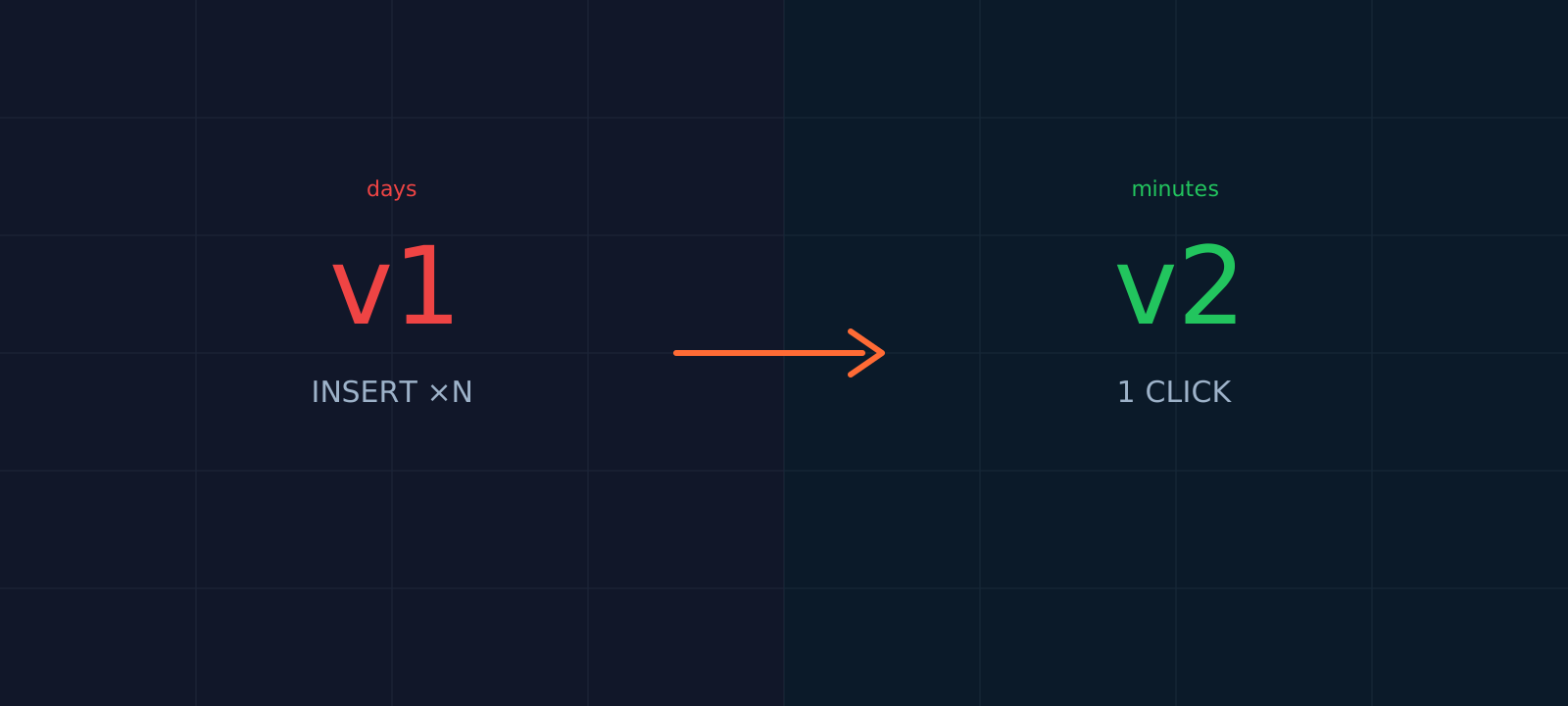
AstralQ started the way every internal product starts: working for one client, with consultancy-grade onboarding. Every new brand followed the same ritual: credentials over email, hand-inserted database rows, marketplace-by-marketplace configuration, and days until the first data.
It worked. But every new client cost the same as the last one — and access tokens moved through people, in chats and emails. That doesn't scale, least of all in a product analyzing Amazon sales data.
What v2 demanded
- Onboarding with zero engineering intervention
- Credentials that never pass through a human
- Every brand seeing only its own data — real per-tenant isolation
- A pipeline that starts itself, with no manual configuration
What we built
- Login with Amazon: the seller clicks Connect, authorizes with their own Amazon account, done — they never share secrets with anyone
- An atomic tenant: the account is created in a single transaction — it's either fully born or not born at all; no half-tenants left behind
- Credentials encrypted at rest, persistent per marketplace
- Per-tenant isolation: each brand sees only its operation; the dashboard, reports and data respect that boundary
- Auto-started pipeline: first data in minutes, not days
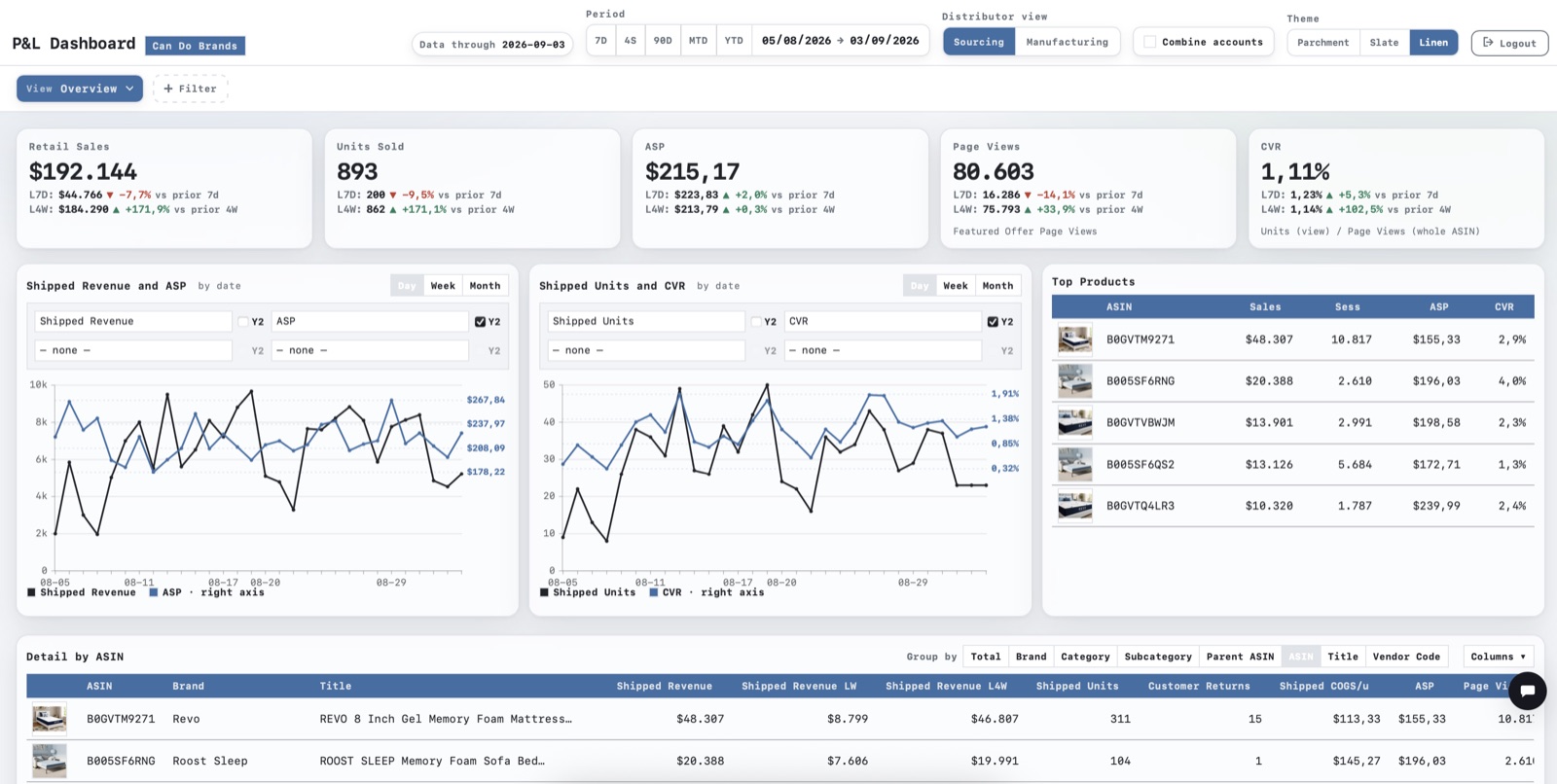
The result
| v1 | v2 |
|---|---|
| Days to first data | minutes |
| Credentials over email | seller's own authorization |
| Tokens visible to the team | encrypted at rest |
| Every client = manual work | every client = one click |
The takeaway
Self-service isn't a nice feature: it's the difference between a product and a service. As long as onboarding depends on someone from your team, every new client competes for your engineers' time. When the customer serves themselves, the marginal cost of growth trends to zero — and security improves along the way, because secrets never leave the system.